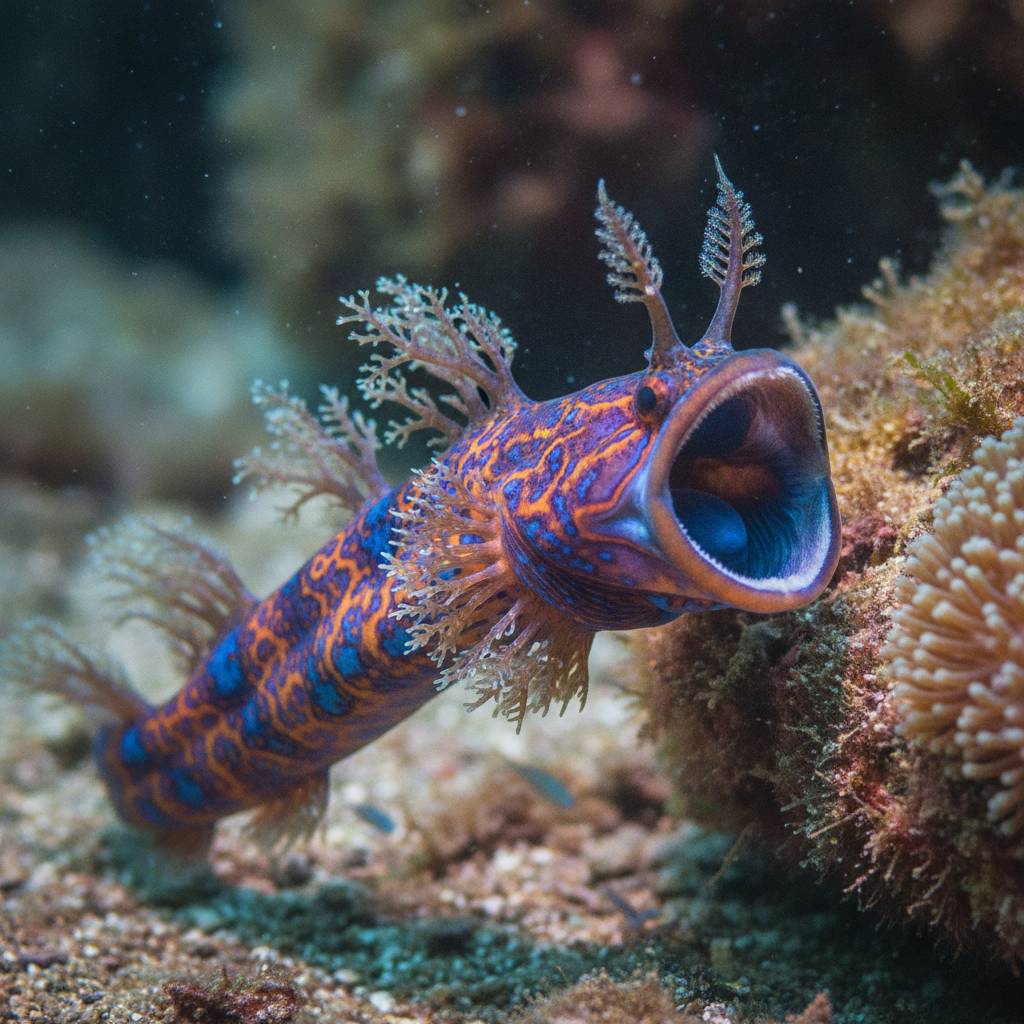
Rhinoperca vividus
Nudifront
Field Report Summary
First documented in the shallow, rocky intertidal zones off the coast of Southern California, the Nudifront exhibits an unexpectedly fierce temperament for its size, often engaging in dramatic mouth-gaping displays to intimidate rivals. Researchers note its unique ability to absorb and display defensive toxins from its diet of sponges, a trait inherited from its nudibranch ancestry, making it a formidable, albeit visually stunning, resident of its coral reef and rocky crevice habitats.
Physical Description
Measuring up to 30 centimeters in length, the Nudifront possesses a compressed, elongated body typical of blennies, but its skin is entirely scaleless, smooth, and richly patterned with iridescent blues, oranges, and purples, mimicking the aposematic coloration of toxic nudibranchs. Its most striking feature is an oversized, frilled mouth that can expand dramatically, revealing a darkly colored interior, framed by delicate, branching cerata that pulsate gently, extending along its back and head where prominent, stalk-like rhinophores protrude.
Habitat
Shallow temperate rocky reefs, tide pools, and coral rubble zones of the Eastern Pacific.
Dietary Behavior
An ambush predator, the Nudifront consumes small crustaceans, larval fish, and juvenile mollusks, occasionally incorporating sponges into its diet to sequester defensive compounds for its skin and cerata.
Evolutionary Origin
Genetic analysis suggests a rare interspecies hybridization event between *Neoclinus blanchardi* (Sarcastic Fringehead) and an unknown species of nudibranch from the family *Dermatobranchidae* or *Flabellinidae*, likely facilitated by shared spawning grounds and the accidental cross-fertilization of gametes during a period of environmental stress that broke down reproductive barriers, leading to a viable, if unusual, offspring.